
Climate risks are no longer a distant scenario but a real economic variable. They affect emerging and frontier markets earlier, more severely, and often with less preparedness than developed economies. For investors, this is typically viewed as a risk. From an impact perspective, however, a different dimension emerges where vulnerability and structural deficits are high, investments can generate the greatest impact.
Yet this is only part of the story. In the market for green, social and sustainability bonds, the focus is increasingly shifting, not only geographically, but also regarding data quality, governance standards and the growing relevance of climate adaptation. After years of rapid growth, it is no longer sufficient to look solely at issuance volumes or labels. Especially from an impact investment perspective, a different question moves to the forefront: where and under what conditions does an invested euro generate the greatest measurable climate impact?
Why emerging markets enable structurally higher impact
The economic logic is clear. In many emerging markets, energy systems remain heavily dependent on fossil fuels. Investments in renewable energy replace emissions-intensive baselines rather than optimizing systems that are already comparatively clean. As a result, the marginal climate impact is significantly higher. At the same time, the societal relevance of these investments is substantial, as they directly affect energy security, price stability and long-term resilience.
An analysis conducted by BlueOrchard’s Impact Team evaluated a dataset of approximately 4,700 green and sustainability bonds. The analysis was limited to issuances with a volume above USD 100 million and with published impact reporting. The focus was on so-called impact intensities, such as avoided CO₂ emissions, installed renewable capacity or energy generated per million issued.
What the data show – and what they do not
The results are clear. On average, particularly for renewable energy projects, labelled bonds from emerging and developing economies exhibit significantly higher positive impact intensity than comparable bonds from developed markets. For every million euros issued, such bonds in developing economies finance a median of 0.51 megawatts of installed capacity and 0.86 megawatt-hours of electricity generation. In developed markets, the corresponding figures are 0.30 megawatts and 0.46 megawatt-hours.
However, it may be that a renewable energy project in a developed market can be more climate-effective than a green building project in an emerging market, underscoring that region alone is not a sufficient criterion. A project-level analysis is therefore essential to understand true impact and its specific context.
A concrete example: Renewable energy in Argentina
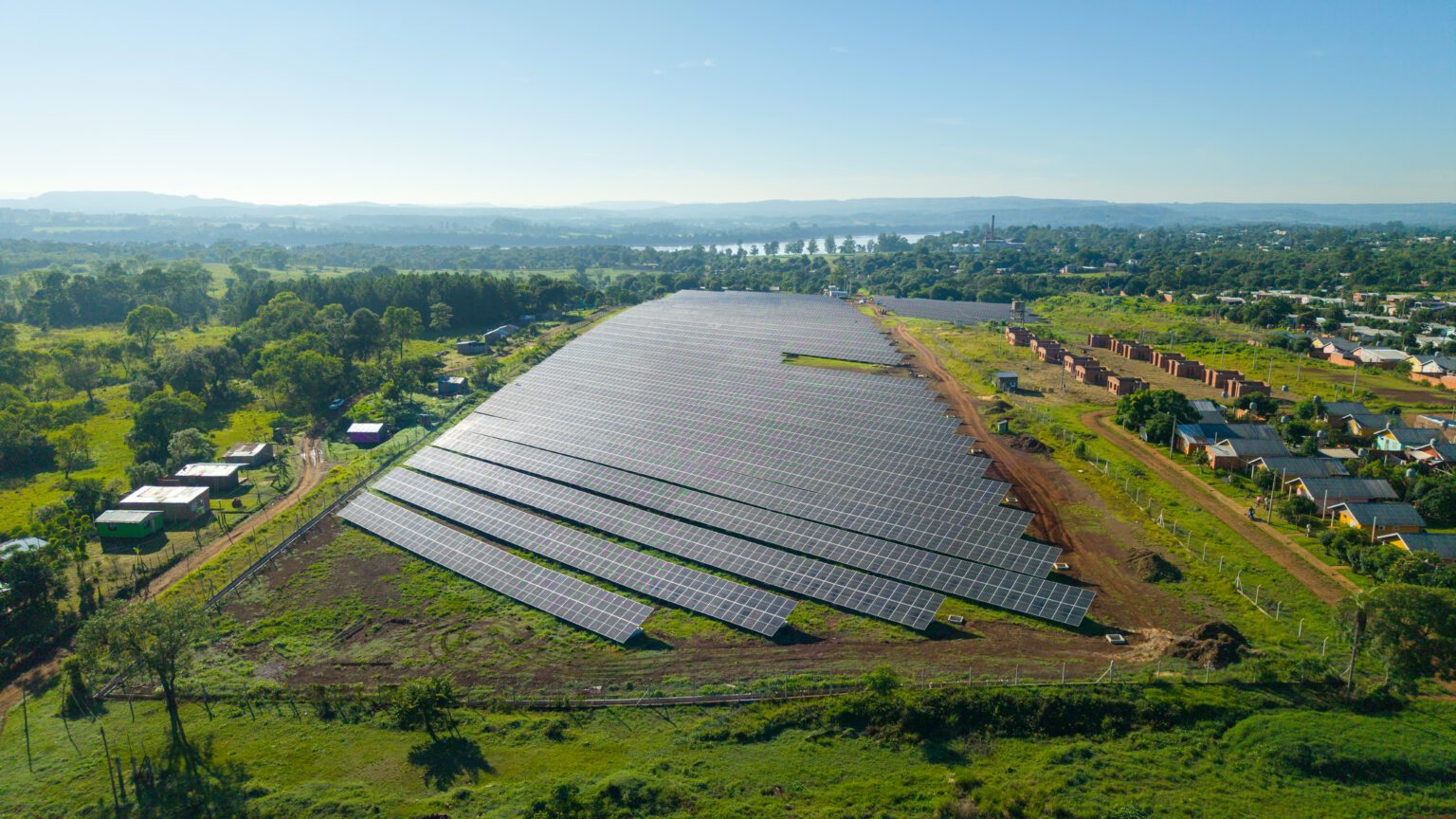
This logic is clearly illustrated by the recent example of Genneia’s green bond in Argentina. Genneia is a renewable energy producer supplying electricity to more than one million Argentine households. Through its green bond issuances, Genneia has financed the large-scale expansion of new renewable energy capacity and today accounts for roughly 21 percent of the country’s total renewable electricity capacity.
From an impact perspective, this is decisive. The projects displace fossil-based generation in a power system with high emissions intensity and constrained access to alternative financing. As a result, the climate impact per unit invested is exceptionally high, with impact-efficiency metrics close to ten times the median observed for labelled bonds. The Genneia example shows how scale, additionality, and context combine to make impact efficiency a measurable and tangible outcome.
From climate mitigation to climate adaptation
To date, the focus of green bonds has been clearly on emissions reduction. As global temperatures continue to rise, adaptation to unavoidable climate risks will become increasingly important. Emerging markets, in particular, exhibit the largest resilience gaps and at the same time the highest capital needs. This raises the next key question for the bond market: how can adaptation investments also be made measurable and investable?
Recent research highlights the scale of this challenge. According to the McKinsey Global Institute, annual investments of up to USD 1.2 trillion could be required by 2050 to bring climate adaptation measures in line with developed-economy standards.
Allocating capital where impact is highest
The available data already show that climate impact can be measured—but it is unevenly distributed. For investors, this has clear implications. What matters is not only whether a bond is labelled green, but where and for what purpose capital is deployed. Region, project type and impact intensity are decisive in determining the actual contribution an investment makes. Those who seek to systematically maximise impact must account for these differences and allocate capital deliberately to where it achieves the greatest measurable climate effect.
At the same time, maximising impact is not only a question of project selection, but how impact considerations are embedded in the investment process. Impact efficiency becomes meaningful only when assessed across a broad universe of bonds and supported by governance structures that clearly separate impact analysis from credit decisions. As impact data become more granular, investors are increasingly able to compare environmental outcomes across regions and project types and allocate capital in a more disciplined way to those investments that deliver the highest measurable climate effect.
-ends-
Important information
Marketing material for Professional Clients and Qualified Investors only.
The information in this document was produced by BlueOrchard Finance Ltd (“BOF”), part of Schroders Capital which refers to those subsidiaries and affiliates of Schroders plc that together comprise the private markets investment division of Schroders.
BOF has outsourced the provision of IT services (operation of data centres, data storage, etc.) to Schroders group companies in Switzerland and abroad. A sub-delegation to third parties including cloud-computing service providers is possible. The regulatory bodies and the audit company took notice of the outsourcing and the data protection and regulatory requirements are observed. For information on how BOF and the Schroders Group may process your personal data, please view the BOF Privacy Policy available at www.blueorchard.com/legal-documents/ and the Schroders’ Privacy Policy at https://www.schroders.com/en/global/individual/footer/privacy-statement/ or on request should you not have access to these webpages.
The use of UN Sustainable Development Goals (SDG) icons or logo, including the colour wheel, is for purely informational purposes. The use of SDG icons and/or any reference to the SDGs is non-promotional and in no way is intended to imply any affiliation with or endorsement by the United Nations.
Issued by BlueOrchard Finance Ltd, Talstrasse 11, CH-8001 Zurich, a manager of collective investments authorised and supervised by the Swiss Financial Market Supervisory Authority FINMA, Laupenstrasse 27, CH-3003 Bern.